BEHIND EVERY DOSE OF PERSONALIZED MEDICINE IS A COMPLICATED NETWORK THAT SUPPORTS
THE COLLECTION, PROCESSING, AND PATIENT CARE THAT GOES INTO ADVANCED THERAPIES.
Advanced therapies hold transformative potential, but their success hinges on far more than clinical efficacy. Behind every dose of personalized medicine delivered to a patient lies a complicated network of collection sites, couriers, cryopreservation processing, storage facilities, and manufacturing centers, many operating wholly independently of one another. This fragmentation creates friction.
Therapeutic developers face the often-daunting challenge of coordinating siloed partners, each with their own processes and standards. The result? Delays, inconsistencies, compliance risks, and added cost. As the industry matures, developers are re-thinking how they design the physical and operational pathways that support their therapies.
Increasingly, the market is shifting toward an integrated, defragmented supply chain approach, and beginning this planning from the earliest stages to support seamless scalability as programs move through clinical trials and through to commercialization. This approach helps developers gain control, reduce risk at every stage, and scale with confidence by beginning with the end in mind.
Fragmentation doesn’t always show up as a single catastrophic failure. More often, it erodes performance through a series of small, compounding inefficiencies, many of which aren’t visible until they begin to affect timelines or product quality.
One of the most common and costly consequences is the loss of valuable materials due to inconsistent protocols across collection, transport, cryopreservation, and storage vendors. For example, differences in time-to-freeze between sites, variability in cryoprotectant usage, or even packaging missteps can all compromise cell viability long before a therapy reaches the manufacturing floor. When upstream processes are managed by disparate vendors with differing standards and documentation practices, it becomes difficult (if not impossible) to trace issues back to the root cause.
There’s also an operational cost. Supply chain and clinical operations teams often find themselves filling the gap between vendors by chasing down shipping documentation, managing temperature excursion investigations, or manually reconciling inventory across systems that don’t speak to one another.
Financially, fragmentation often forces overcompensation, as well. Developers may contract with multiple vendors to hedge against reliability issues, maintain excess inventory buffers “just in case,” or expedite shipments at premium rates to recover from preventable delays. These hidden costs quietly inflate operational spend and divert resources from critical innovations.
Perhaps most concerningly, fragmentation dilutes accountability. When handoffs increase, so do opportunities for communication breakdowns and finger-pointing, especially during regulatory inspections or quality events. With each added link in the chain, visibility narrows.
A defragmented approach doesn’t just remove complexity and streamline operations, it actively restores control, reduces waste, and aligns every part of the network to a single standard.
Accelerate Your Program from the Start with an Early Supply Chain Strategy
Too often, supply chain planning is treated as a downstream task, something to be solved once clinical trial protocols are finalized and sites are selected. But for advanced therapy development, that sequencing no longer works. The complexity of today’s autologous and allogeneic workflows means supply chain strategy must be embedded into the clinical strategy from the outset.
Early supply chain planning directly accelerates clinical readiness. When developers build infrastructure in parallel with protocol development, they avoid last-minute bottlenecks that delay first-in-patient timelines. For example, qualifying shipping systems, establishing collection kit specifications, and validating storage and cryopreservation protocols all take time. But when completed early, these foundational elements allow clinical activities to launch as soon as regulatory approvals are in place.
Ultimately, early integration of supply chain expertise helps de-risk development, improve site performance, and support faster, more reliable delivery of clinical outcomes. It shifts the operational model from reactive to proactive and makes clinical success more achievable by design.
Adopt a Fully Integrated Supply Chain Partnership
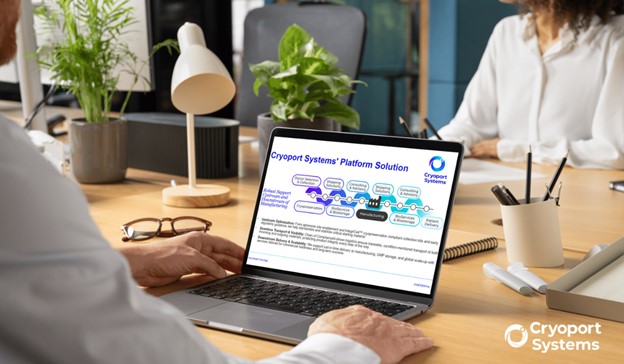
AN INTEGRATED PARTNER BRINGS TOGETHER THE SUPPLY CHAIN ELEMENTS THAT SUPPORT DEVELOPMENT
UPSTREAM AND DOWNSTREAM OF MANUFACTURING FOR A UNIFIED, COHESIVE INFRASTRUCTURE.
Integration is a common buzzword, but in practice, many developers are burdened by the challenge of managing a fragmented web of vendors, each responsible for a narrow function in the supply chain. True integration goes far beyond bundling services. It’s about aligning systems, data, standards, and support to function as one cohesive infrastructure.
An integrated partner doesn’t just provide logistics or storage. They bring upstream, midstream, and downstream services under a unified strategy. That means one team supporting everything from collection kit production and cryopreservation protocols to Qualified Person (QP) release and final delivery to the patient’s bedside. It also means fewer handoffs, fewer opportunities for miscommunication, and a single source of accountability when challenges arise.
Day to day, the difference is tangible. Developers no longer need to coordinate across multiple time zones, reconcile mismatched SOPs, or manage disconnected documentation flows. With an integrated partner, there’s one point of contact, one quality system, and one overarching performance standard governing the entire supply chain. Material history is visible across every step. Audits and regulatory filings move faster. Change control becomes efficient. And when it’s time to scale or adapt a new regulatory requirement, the path forward is clear because the partner supporting the program has already been thinking ahead.
Integration brings efficiency, but it also builds trust. When the entire supply chain is intentionally designed and working seamlessly, therapy developers can focus on innovation, knowing the operational foundation beneath them is strong, stable, and purpose-built to Enable the Outcome™.
Standardize Collection and Upstream Logistics
Autologous cell therapies, in particular, begin with a patient – and a personalized collection. At this early stage, standardization is often undervalued. Variability in how patient material is collected, packaged, and transported can impact everything that follows.
Imagine starting instead with a standardized collection kit, custom-designed for a specific protocol. The kit arrives at the collection site alongside a validated, pre-conditioned shipping system. Instructions are clear. Materials match. Timelines are aligned. From the outset, this upstream coordination helps ensure consistency and data and material integrity.
More than simply delivering a box, this is about embedding reliability into the process from day one. Developers who take this approach reduce variability and build operational resilience from the ground up.
Even more importantly, these early infrastructure decisions affect patient experience, site compliance, and protocol adherence. When collection processes are streamlined and materials arrive on time and intact, downstream manufacturing has more predictable outcomes. These early interactions are often overlooked in operational strategy, but they play an outsized role in trust and technical success.
Centralize Cryopreservation to Reduce Variability and Enhance Viability
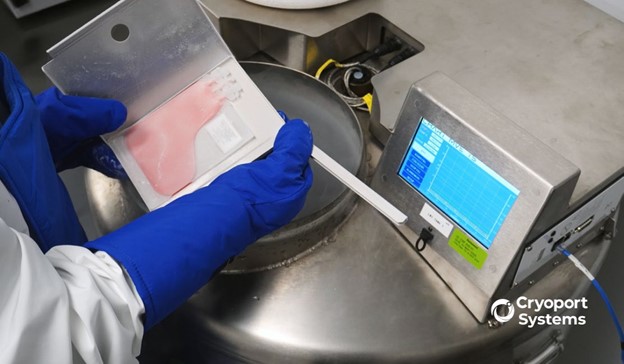
CENTRALIZED CRYOPRESERVATION OF LEUKAPHERESIS-DERIVED STARTING MATERIALS
UNDER STANDARDIZED PROTOCOLS ENSURES UNIFORMITY AND MAXIMIZES MANUFACTURABILITY.
Cryopreservation is a powerful enabler, but is still managed inconsistently across the industry. When processing occurs at decentralized sites, protocols can vary widely. This introduces uncertainty into cell viability and downstream manufacturing outcomes.
Centralized cryopreservation, performed under standardized, validated protocols, offers a way forward. A consistent approach ensures uniform handling of patient material, reducing risk while enhancing manufacturability and predictability of manufacturing outcomes.
IntegriCell™ cryopreservation services, for example, were developed in response to the industry’s need for starting material cryopreservation that supports both quality and scalability. Using an automated closed process (or bringing in your own protocol through tech transfer) ensures maximum long-term success of preserved cells in a therapeutic context.
This step is also a critical turning point in the therapy timeline. A reliable cryopreservation and storage solution creates flexibility in manufacturing scheduling, giving developers more options and extended timeframes for optimizing their workflows and maximizing manufacturing slot utilization. It transforms the upstream supply chain from reactive to proactive, and that agility becomes a competitive advantage.
Gain Agility and Oversight with Integrated BioStorage
After cryopreservation, the question becomes where (and how) to store these materials. Often, the answer involves disconnected storage providers, manual transfers, or improvised solutions. Each step increases exposure to risk.
In contrast, integrated biostorage solutions allow materials to move directly from cryopreservation into validated facilities that are designed to manage them under cGMP conditions, with the oversight and security required to support clinical or commercial readiness. Importantly, these systems also support just-in-time release, ensuring materials are available precisely when manufacturing schedules demand, alleviating internal pressures for onsite biostorage at manufacturing facilities.
Developers gain flexibility without giving up control. That balance is critical, especially for early-phase programs where timelines and targets can change quickly.
Mitigate Risks Before They Emerge
Many of the most impactful supply chain decisions are made before the first shipment ever moves. That’s why early-stage consulting and advisory services play such a vital role. Developers often benefit from early-stage expert guidance on shipping lane design, risk assessments, packaging validation, and regulatory navigation.
When done well, this kind of collaboration becomes a shared strategic function, not a transactional one. It means developers can enter trials or expand programs with confidence, knowing upstream vulnerabilities have already been addressed.
Whether the concern is compliance with global regulations, shipper performance, or environmental monitoring, planning ahead enables smoother execution later. It also lays the foundation for scale, as successful early-phase infrastructure can be adapted to support later-phase growth rather than replaced.
For example, choosing shippers that can be qualified across regions early can prevent painful delays when expanding into new geographies. Similarly, designing temperature-monitoring SOPs with commercial expectations in mind saves rework and costly revalidation later.
Coordinate Downstream Logistics
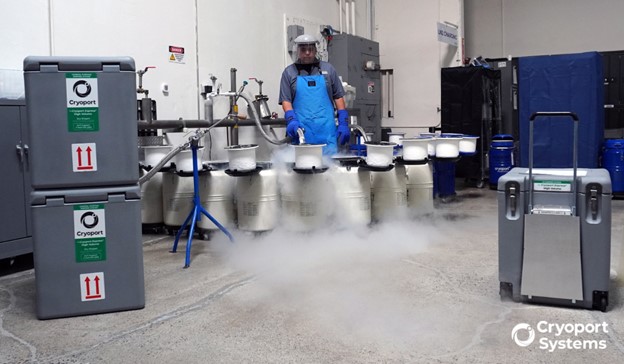
VALIDATED SHIPPING SYSTEMS AND ADHERENCE TO THE INDUSTRY’S MOST COMPREHENSIVE
AND RIGOROUS COMPLIANCE STANDARDS HELPS TO MITIGATE RISK AT EVERY STEP.
After manufacturing, the challenge becomes ensuring the final product reaches the patient, at the right time and under the right conditions. Temperature excursions, customs delays, and administrative errors can all compromise an irreplaceable dose.
Validated shipping systems, paired with integrated downstream BioServices like biostorage, labeling, secondary packaging, and distribution, offer a clear advantage. When these services are informed by the same upstream protocols that governed collection and cryopreservation, the entire system becomes more predictable.
As therapies expand across regions, additional layers such as Qualified Person (QP) release or site-specific compliance add complexity. Developers need logistics and supply chain partners who understand these challenges and are equipped to support growth without compromising on control.
Advanced therapy products are particularly sensitive, and their distribution must be tailored to the realities of clinical sites. These needs can be seamlessly integrated into workflows when the downstream partner is aligned with the upstream plan.
Build Alongside a Scalable Platform
One of the most significant pain points in therapy development is the transition between phases. What works for a Phase I trial may not be sufficient for global commercial distribution.
An integrated supply chain partner should be able to scale with the program, without requiring a full redesign. That means services and systems should be modular, flexible, and adaptable in real time. Developers benefit from continuity, building in processes that evolve with their needs rather than reset at every milestone.
At the end of the day, this is about building a long-term operational strategy alongside a partner who understands the full therapy lifecycle. It’s so much more than outsourcing logistics. And when this level of care and thought is developed from the very earliest stages, scaling through trials and into commercialization becomes seamless, with risk mitigation built from the earliest stages. Operational leaders can focus on what matters, while the infrastructure around them adjusts to scale.
Cryoport Systems is Leading the Way
As the industry shifts toward defragmentation, Cryoport Systems is delivering the infrastructure and quality that advanced therapies require. We have built an integrated supply chain platform that spans the entire product lifecycle, combining consulting and advisory services, logistics, transportation, BioServices and biostorage, cryopreservation, and data-driven oversight into a unified ecosystem.
Our IntegriCell™ cryopreservation services, developed specifically for the needs of cell therapies, reduce variability, support high viability, and extend manufacturability. Our global biostorage footprint enables just-in-time material release, alleviating the burden on internal resources. We own and operate our fleet of industry-leading, temperature-controlled shipping systems (which are fully disinfected and requalified before every use), offering unparalleled control over transport timelines and equipment readiness.
Importantly, Cryoport Systems isn’t a vendor piecing together disparate services. We are a partner working in lockstep with therapy developers to address challenges early, support scalability as programs progress, and maintain compliance in an evolving regulatory landscape. Through our proprietary Chain of Compliance® and our consultative approach to early-phase planning, we help ensure that developers are building supply chains that, at the end of the day, function as robust, future-ready infrastructures.
Cryoport Systems exists to Enable the Outcome™. We are committed to creating the standard that advanced therapies deserve and patients require.
Looking Ahead
The future of advanced therapies depends on the ability to remove friction, reduce risk, and preserve quality across increasingly complex supply chains. Fragmentation doesn’t just slow things down, it introduces risks and unknowns that developers can’t afford.
That’s why leading therapy developers are moving toward integrated platforms that can deliver across the full continuum of care, from patient collection to final-mile delivery. The benefits are clear, as this approach creates fewer delays, fewer handoffs, more transparency, and greater confidence.
The most successful therapies of tomorrow will be built not just on great science, but on great systems. Supply chain strategy is quickly becoming a critical part of clinical strategy. And integration is the key to unlocking both.
By embracing defragmentation today, therapy developers can build supply chains that are not only compliant, but resilient, responsive, and ready to support the next generation of patient care.
#IndustryMemberNews
#Industry