Developed by:
Cold Chain Management and Logistics Working Group
Process Development and Manufacturing Committee
Introduction
Cryopreservation is central to the manufacturing, distribution, and clinical delivery of cell and gene therapy products. Freezing enables centralized production, global distribution, and flexible clinical scheduling, but it also introduces biological stress and analytical complexity that must be understood and controlled.
Given this importance, the ISCT Cold Chain Management and Logistics Working Group conducted a survey of the ISCT community to better understand current practices, challenges, and decision drivers related to post-thaw analytics for cryopreserved cell-based products and intermediates. The survey is part of an ongoing series examining cold chain practices within the CGT industry. The survey included nearly 100 respondents representing cell therapy developers, academic and hospital-based GMP manufacturing centers, CDMOs, collection and therapeutic administration sites, and suppliers and consultants. Programs spanned the full development continuum, from academic research and preclinical development through clinical-stage and commercial manufacturing.
The survey explored:
- Product modalities and extent of cryopreservation use
- Parameters measured after thaw
- How post-thaw data are applied across the development lifecycle
- Factors influencing analytical strategy
- Key pain points and areas of uncertainty
The results reveal strong areas of alignment, including the near-universal use of viability and recovery measurements, as well as persistent uncertainty regarding regulatory expectations, consensus on which additional parameters are most meaningful, and how best to interpret the biological impact of cryopreservation. This article summarizes the key findings from the post-thaw analytics survey.
1. Cryopreservation Is Standard Practice in CGT
The survey data show that cryopreservation is the dominant storage paradigm across today’s cell and gene therapy workflows. Approximately 91% of respondents reported working with frozen or cryopreserved materials. More than 90% indicated storage between -100 and -196 °C, consistent with liquid nitrogen or vapor-phase cryogenic conditions. Storage at -80 °C was uncommon (4%), and no respondents reported routine storage in the 0 to -30 °C range. Given that roughly two-thirds of respondents develop cell-based products and nearly half work with cellular starting materials, reliance on cryogenic storage is not surprising. For many programs, cryopreservation is not optional; it is built into the manufacturing and delivery strategy from the outset.
The freeze-thaw process, however, introduces well-known biological stresses (1,2). Cell injury is not typically associated with storage at cryogenic temperatures, but rather with passage through intermediate temperature zones, between approximately −15°C to −60°C, during freezing and thawing. As extracellular ice forms, osmotic gradients drive water efflux from the cell, increasing intracellular solute concentration. If cooling is too rapid, insufficient water loss leads to intracellular ice formation, which is generally toxic. If cooling is too slow, excessive dehydration and prolonged exposure to highly concentrated solutes produce so-called solution effects injury. These primary biophysical events can disrupt membrane integrity, alter intracellular structures, and initiate downstream biological responses. Functionally, the consequences may be immediate or may emerge hours after thaw, complicating interpretation of post-thaw analytical results. Post-thaw analytics are therefore essential for linking manufacturing control to functional performance.
2. Post-Thaw Analytics Are Integrated Across the Lifecycle
Post-thaw analytics are used across development activities, not only for drug product lot release. Respondents reported applying post-thaw data to process development (72%), defining critical quality attributes (72%), lot release (59%), and comparability assessments associated with manufacturing changes (54%). Approximately one-third indicated that post-thaw data are generated as additional supporting documentation beyond these primary uses (Figure 1).
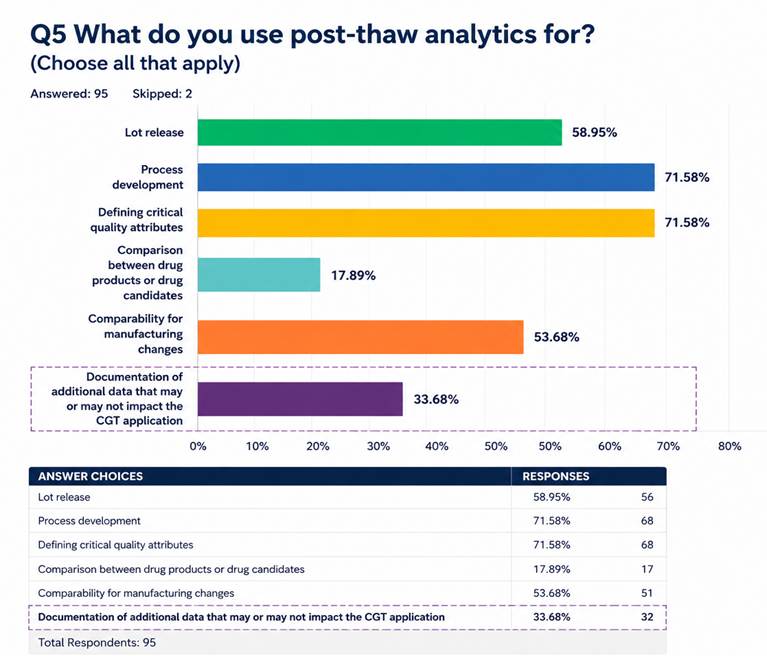
Figure 1. Post-thaw analytics are integrated across the product lifecycle.
These responses indicate that post-thaw characterization supports process understanding, not merely confirmation that a lot meets predefined specifications. Freeze-thaw performance informs process optimization, acceptable operating ranges, and change control decisions. In this context, post-thaw data function as part of the broader product knowledge framework rather than as a standalone quality check.
The timing of method development provides additional perspective. Approximately 51% of respondents reported focusing on post-thaw method development prior to clinical-enabling studies, and an additional 29% before initial IND submission. This early emphasis reflects recognition that freeze-thaw effects influence interpretation of potency, viability, and other critical quality attributes. However, it remains unclear whether post-thaw strategies are routinely revisited as mechanistic understanding of the product deepens.
3. How the Field Defines and Develops Post-Thaw Analytics
The survey results indicate that post-thaw analytics do not follow a single standardized panel of assays, but instead serve distinct analytical objectives (Figure 2). Some parameters are nearly universal, while others are applied selectively depending on product class, mechanism of action, and development stage. This variability reflects differences in product type and analytical intent rather than a lack of alignment.
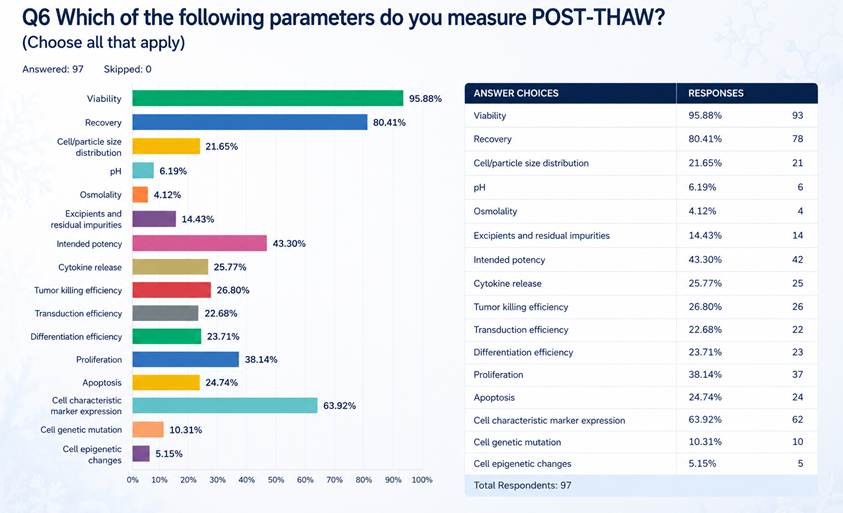
Figure 2. How the field defines and develops post-thaw analytics.
4.1 Viability and Recovery Metrics
Viability (96%) and recovery (80%) are the most commonly measured post-thaw parameters, functioning as baseline assessments. Given that roughly two-thirds of respondents develop cell-based products and nearly half work with cellular starting materials, this emphasis is expected. Adequate viable cell number and acceptable recovery are prerequisites for interpreting downstream functional assays.
When asked what matters most for reliability, the largest proportion of respondents (40%) selected that the analytical technique must be appropriate for the sample. An additional 26% emphasized correlation of results to product disposition. Instrument calibration and operator training were selected less frequently, suggesting respondents viewed biological relevance and product disposition linkage as the primary differentiators for method reliability in this context.
4.2 Identity and Functional Competence
Cell characteristic marker expression was reported by 64% of respondents, while intended potency (43%) and proliferation (38%) were also frequently assessed. These parameters evaluate whether thawed cells retain expected phenotype and functional capacity. Their prevalence aligns with standard release and characterization strategies across many cell therapy platforms.
The characteristics respondents value in a post-thaw method reinforce this pattern. The most frequently selected attributes were that a method be controlled and well-defined (32%) and correlated with stability or shelf life (31%). Sensitivity was selected by 24%, and tight consistency within and between lots by 12%. The emphasis is on interpretability and linkage to product performance rather than purely statistical precision.
4.3 Mechanism-Specific Functional Assays
Cytokine release (26%), tumor killing efficiency (27%), transduction efficiency (23%), and differentiation efficiency (23%) were reported less frequently. These assays are closely tied to specific mechanisms of action and product types. Their distribution likely reflects biological specificity across modalities rather than inconsistency in analytical approach.
4.4 Stress and Delayed Injury Indicators
Approximately 25% of respondents reported measuring apoptosis post-thaw. The survey does not distinguish the timing of when viability and recovery are assessed. In practice, cells may appear intact shortly after thaw based on membrane integrity assays, yet exhibit delayed apoptosis or functional decline over the subsequent 24 to 48 hours. The majority of respondents also reported controlling variables such as the process between thaw and measurement (70%) and the time point after thaw (68%), indicating awareness that post-thaw interpretation is sensitive to handling and timing. The lower frequency of apoptosis measurement suggests variability in how programs assess delayed injury associated with cryopreservation.
4.5 Physical and Formulation-Related Parameters
A subset of respondents reported measuring cell or particle size distribution (22%), as well as pH, osmolality, and residual excipients. These measurements are less focused on intrinsic cellular biology and more on the physical and formulation environment of the thawed product. Size distribution, in particular, may relate to aggregation, subvisible particles, or attributes relevant to administration and patient safety.
4.6 Deep Molecular Characterization
A small minority reported assessing genetic mutation (10%) or epigenetic changes (5%). These analyses represent high-resolution molecular characterization and are likely limited to specific modalities or advanced comparability studies.
The timing of method development adds additional perspective. More than half of respondents reported focusing on post-thaw method development prior to clinical-enabling studies, with an additional 29% emphasizing development before initial IND submission. This pattern indicates that post-thaw characterization is being integrated early in product development rather than deferred to later regulatory milestones.
Overall, the data indicate that the field approaches post-thaw analytics with a focus on biological relevance, procedural control, and early integration into development strategy. At the same time, the diversity of product types and analytical objectives highlights the difficulty of defining uniform expectations for post-thaw characterization across the cell and gene therapy landscape.
4. Regulatory Expectations and the Perceived Guidance Gap
The survey results reveal a notable tension in how post-thaw analytics are positioned within development strategy. Regulatory guidance and standards were identified as the primary driver influencing analytical decisions, with 71% of respondents selecting this factor. At the same time, 38.8% cited lack of industry guidance or standards documentation as the most significant pain point (Figure 3).
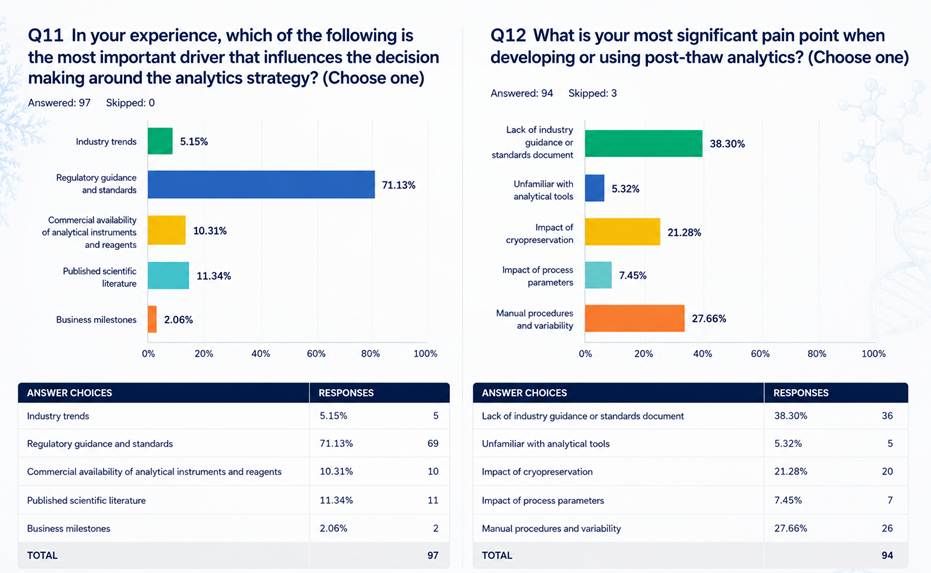
Figure 3. Regulatory expectations and the perceived guidance gap.
These findings suggest that developers anchor their post-thaw strategies to anticipated regulatory expectations, yet many perceive that those expectations are not clearly articulated or consistently interpreted across programs. Regulatory frameworks for biological and cell-based products are intentionally principle-based and not product-specific. Sponsors are expected to define critical quality attributes, establish appropriate analytical methods, and justify specifications based on product knowledge, mechanism of action, lifecycle stage, and risk assessment rather than adherence to a prescriptive assay list (3,4). In this context, the perceived guidance gap may reflect the inherent challenge of applying broad regulatory principles to highly diverse and evolving therapeutic modalities.
Post-thaw characterization spans structural integrity, functional competence, mechanism-specific assays, stress indicators, and formulation-related parameters. These categories do not map cleanly onto a single set of universal assays. A cytotoxic cell therapy, an MSC-based immunomodulatory product, and an iPSC-derived differentiated product may require fundamentally different post-thaw readouts to demonstrate clinical relevance. Given this diversity, it is not surprising that developers want clearer standards. Viability is widely accepted as a baseline measure. The uncertainty lies in which additional parameters truly reflect freeze-thaw impact, how those measurements should be timed relative to thaw, and how much supporting evidence is needed to justify an approach in regulatory submissions.
The survey findings suggest that the issue is not a lack of engagement, but rather the difficulty of defining shared expectations across very different product classes. Uniform assay lists are unlikely to solve that problem. Alignment will depend more on continued technical dialogue, publication of case studies, and practical experience that links post-thaw performance to product mechanism and clinical function.
5. Biological and Operational Challenges in Post-Thaw Performance
In addition to the perceived guidance gap, 21% of respondents identified the biological impact of cryopreservation itself as a significant pain point. Differences between fresh and post-thaw material are expected. The freeze-thaw process imposes osmotic stress, membrane injury, and metabolic disruption that may alter cell behavior in ways not immediately apparent. The central challenge is not whether freeze-thaw-associated changes occur, but how those changes should be interpreted. Some effects are transient, while others may persist or correlate with potency and clinical performance. The timing of measurement relative to thaw is therefore critical. Immediate membrane integrity shortly after thaw does not necessarily predict longer-term functional capacity.
Manual procedures were also cited as a notable source of variability, with 28% of respondents identifying manual handling as a pain point. Even in controlled environments, differences in thaw technique, dilution and washing steps, time-to-assay intervals, culture recovery periods, instrument setup, and sample acquisition can influence post-thaw readouts.
At the same time, the majority of respondents reported actively controlling key pre-analytical variables, including the process between thaw and measurement (70%), the time point after thaw (68%), and upstream storage or shipping conditions (60%). This reflects broad awareness that post-thaw variability is often driven by handling and timing variables, not only assay design. The survey cannot distinguish whether observed variability originates primarily from the freeze–thaw process itself, pre-analytical handling, or analytical execution. In practice, these factors are interdependent.
Opportunities for improvement likely include standardizing thaw protocols, defining acceptable thaw-to-assay windows, refining analytical endpoints, and strengthening procedural controls. Greater use of closed-system processing and automation of wash and dilution steps may help reduce variability that is procedural rather than biological in origin.
6. Toward Greater Alignment in Post-Thaw Characterization
The survey findings suggest that the primary challenge is not a lack of regulation, but the absence of shared expectations around implementation and interpretation of post-thaw analytical methods. Developers appear aligned on the importance of post-thaw characterization, yet uncertainty persists regarding measurement timing and the amount of supporting data needed across diverse product modalities. Given the biological diversity and pace of development in CGT, alignment is unlikely to come from uniform testing requirements. It will more likely emerge through shared experience, publication of modality-specific case examples, and continued technical dialogue.
Professional societies and working groups, including the ISCT Cold Chain Management and Logistics Working Group, provide forums where these discussions can occur constructively. Continued engagement across developers, manufacturers, regulators, and suppliers will be essential to translate individual program experience into shared practice. As cryopreserved CGT products expand across indications and modalities, transparent data sharing and thoughtful discussion will help ensure that post-thaw characterization evolves alongside scientific and clinical progress.
references
- Gao, D., and J. K. Critser. 2000. “Mechanisms of Cryoinjury in Living Cells.” ILAR Journal 41(4): 187–196.
- Hunt, C. J. 2011. “Cryopreservation of Human Stem Cells for Clinical Application: A Review.” Transfusion Medicine and Hemotherapy 38(2): 107–123.
- International Council for Harmonisation of Technical Requirements for Pharmaceuticals for Human Use (ICH). ICH Harmonised Guideline Q8(R2): Pharmaceutical Development; 2009.
- U.S. Food and Drug Administration. Potency Tests for Cellular and Gene Therapy Products. Guidance for Industry; January 2011.
#IndustryMemberNews